
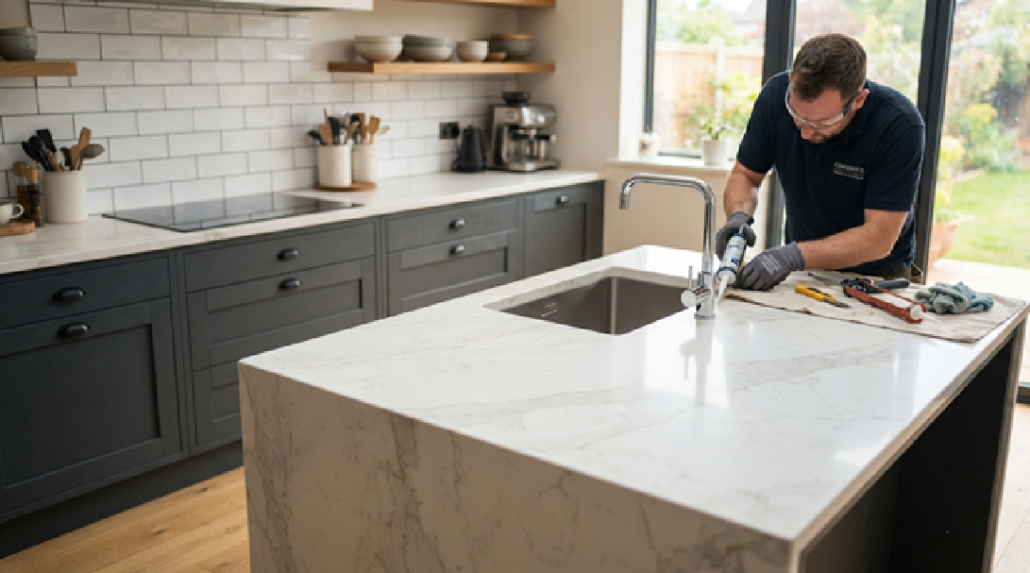
Replacement Kitchen Worktops: A UK Homeowner’s Guide
Key Takeaways
- Kitchen worktop replacement is a cost-effective way to transform a tired room and improve daily functionality without a full renovation.
- Common signs that it is time for a replacement include persistent cracks, water damage around the sink, stubborn stains, and an outdated style.
- Replacement costs vary significantly by material, ranging from budget-friendly laminate to premium quartz, granite, and marble options.
- The installation process involves accurate measuring, removing the old surface, leveling cabinets, cutting off-site for precision, and finishing.
- Proper maintenance and avoiding common mistakes like DIY stone fitting or choosing solely on looks will help your new worktop last for years.
Your kitchen worktop takes a daily beating. Chopping, hot pans, spills, scrubbing — it all adds up. So it’s no surprise that most homeowners eventually reach a point where repairs just won’t cut it. Maybe your worktop is scratched, stained, or dated. Maybe it just doesn’t fit the kitchen you’re planning. Either way, a kitchen worktop replacement is one of the most cost-effective ways to transform the whole room.
This guide covers why homeowners choose replacement kitchen worktops, how much they cost, which material to pick, and what actually happens during installation.
Why Homeowners Choose Kitchen Worktop Replacement
People replace worktops for practical and cosmetic reasons alike. In older kitchens, laminate often shows scratches, burn marks, or swelling around the sink. Edges start to peel. Natural stone worktops like granite or marble tend to stain, chip, or crack over time.
Some homeowners replace their worktop as part of a full kitchen renovation. Others just want a fresh look without the cost of a full refit. Either way, replacing kitchen worktops alone can make a tired kitchen feel brand new.
A new worktop also brings real everyday benefits. It’s easier to keep clean and more hygienic, especially if you use a chopping board instead of cutting straight on the surface. Kitchen upgrades also tend to boost how buyers see a home — useful to know if you’re planning to sell.
Signs It’s Time to Replace Your Worktop
You’ll usually know it’s time when repairs stop being worth it. Watch out for:
- Cracks, chips, or dents that keep coming back
- Swelling or warping around the sink
- Stains that won’t clean off
- Corroded or worn patches
- A worktop you’ve already patched up more than once
- A style that simply looks outdated
Poor day-to-day function is another red flag. If your worktop is awkward to work on or hard to keep clean, it’s slowing you down every time you cook. Newer materials are usually easier to live with and easier to maintain.
How Much to Replace Kitchen Worktops
“How much does it cost to replace a kitchen worktop?” This is the first question most UK homeowners ask. The answer depends on your material and kitchen size, but here’s a rough guide:
| Material | Typical Cost per Linear Metre (Supplied & Fitted) |
|---|---|
| Laminate | £40–£150 |
| Solid wood | £100–£300 |
| Solid surface (e.g. Corian) | £200–£450 |
| Granite | £200–£500 |
| Quartz | £250–£550 |
| Marble | £300–£600+ |
For an average UK kitchen — around 4 to 6 metres of worktop — that usually works out to:
- Budget laminate: roughly £300–£800
- Mid-range (granite or solid surface): roughly £1,200–£2,500
- Premium quartz or marble: roughly £1,800–£3,500+
These prices usually cover removing the old worktop, measuring your kitchen, cutting holes for the sink and hob, and fitting the new surface. The final cost depends on your region, the worktop’s thickness, and how much cutting or joining the job needs. Always get a few quotes from local installers before you commit.
How to Replace Kitchen Worktop: Step by Step
Wondering how to replace a kitchen worktop yourself, or just want to know what a fitter will do? Here’s how the job usually goes.
- Measure and check the kitchen. The old worktop gets cleaned and measured. The installer checks your cabinets, wall alignment, and sink position. This step matters because stone and engineered worktops are cut off-site to fit your exact kitchen.
- Remove the old worktop. The fitter disconnects the sink and dishwasher, unfixes the worktop from the cabinets, and lifts it away.
- Check the cabinets are level. Once the old surface is off, the fitter checks the cabinets underneath. Uneven cabinets put extra stress on a new stone worktop, so this gets fixed first.
- Cut the new worktop to size. The new worktop is cut using the measurements from step one. Holes for the sink, taps, and hob are cut before it arrives on site.
- Fit and finish. The fitter installs the new worktop, joins any seams, secures it to the cabinets, and seals it if needed. Then they reconnect the plumbing and clean up.
Choosing the Right Worktop Material
Each material strikes a different balance of looks, cost, and durability.
1. Quartz Worktops: Quartz is engineered from natural quartz crystals mixed with resin and pigment. It resists moisture and stains well and comes in a huge range of colours and patterns. It’s popular with busy households because it needs almost no maintenance and never needs sealing.
2. Granite Worktops: Granite is a natural stone prized for its one-of-a-kind look. It handles heat well and lasts for years, but it’s porous, so it needs sealing now and then to stay stain-resistant.
3. Marble Worktops: Marble has a timeless, elegant look that suits both classic and modern kitchens. It’s softer than granite or quartz, though, so it scratches and stains more easily. It suits homeowners happy to look after it carefully.
Maintenance After Installation
A little care goes a long way toward extending your worktop’s life:
- Clean quartz and solid surface worktops with a mild detergent, that’s usually all they need.
- Clean granite and marble with a pH-neutral stone cleaner, and reseal them as the manufacturer recommends.
- Use a trivet or pan stand. Hot pans placed directly on the surface can cause staining or, in some materials, cracking.
Common Mistakes to Avoid
Most worktop problems trace back to poor planning at the start. Watch out for these:
- Choosing on looks alone. A beautiful material that doesn’t suit how you actually cook — heavy chopping, hot pans, red wine spills, can turn out to be impractical.
- Skipping maintenance. Skip the sealing or cleaning routine and your worktop won’t last as long as it should.
- DIY stone fitting. Heavy stone slabs are hard to handle safely. Leave this one to the professionals.
- Not confirming appliance sizes. Get your hob, sink, and appliance measurements locked in before the worktop gets cut. Changes afterwards can be costly.
Finding a Kitchen Worktop Replacement Near You
Once you’ve picked a material and set a budget, the next step is finding the right installer. Searching “kitchen worktop replacement near me” is a good starting point, but it’s worth narrowing your options before you commit:
- Check reviews and past work. Look for photos of completed jobs, ideally in the material you’re considering.
- Get at least three quotes. Prices for replacement kitchen worktops vary a lot between local fitters, even for the same job.
- Ask who does the measuring. Stone and quartz worktops should be measured on-site by the fitter, not estimated from a photo.
- Confirm what’s included. Check whether removing the old worktop, waste disposal, and reconnecting the plumbing are part of the price.
- Check for trade credentials. Installers registered with bodies like the Federation of Master Builders (FMB), or approved by a stone or quartz manufacturer, tend to offer stronger guarantees.
A local installer can visit in person, check your cabinets and sink setup, and give you a firm, accurate quote instead of a guess.
Final Thoughts
Replacing a kitchen worktop is one of the easiest ways to refresh your kitchen without the cost of a full renovation. Spot the signs early, weigh up your material options against your budget and lifestyle, understand what the installation involves, and keep up with maintenance afterwards. Do that, and you’ll end up with a worktop that looks great and holds up for years — whether you go for budget-friendly laminate or a premium quartz or granite finish.
People Also Search
Q1. Is quartz worktop real stone?
Quartz worktops contain natural quartz stone but are usually blended with resins and pigments to create a better texture and combination.
Q2. Do quartz countertops require sealing?
Quartz worktops are made up of natural quartz stone bonded together with a small adhesive. Since they are non porous they don’t need sealing like a regular stone or granite.
Q3. Are quartz worktops heat resistant?
Quartz is heat resistant to a degree, but very hot pans should not be placed directly on the surface; use a trivet or heat pad.
Q4. What is the life span of quartz worktops?
With proper care, quartz countertops can easily last for years and are durable.
Q5. Can I replace a worktop myrself?
Laminate is the easiest option for a confident DIYer with the right tools. Stone and quartz are a different story, they’re heavy, need precise cutting, and are genuinely risky to fit without the right equipment. Most UK homeowners leave these to a specialist.

