
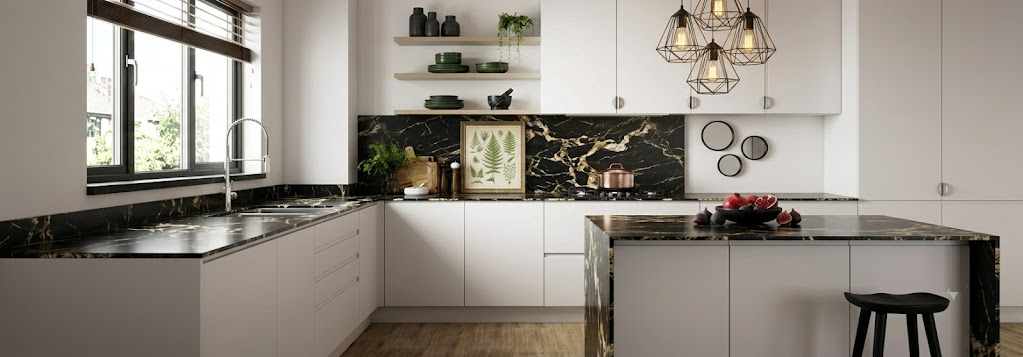
Kitchen Splashback Ideas
Key Takeaways
- A kitchen backsplash serves a vital practical purpose by protecting walls from heat, grease, and moisture while also functioning as a major design feature.
- Choosing the right colour involves matching tones with worktops and cabinets for a cohesive look, making a statement with patterns, or using block colours and classic whites.
- Popular splashback materials include glass for seamless low-maintenance upkeep, traditional tiles for endless design variety, and solid panels for a continuous flow from worktops.
- Practical considerations require extending the splashback wide enough to catch spatter, ensuring heat resistance behind hobs, and planning for socket cut-outs in advance.
- Current trends heavily favor full-height, seamless slab splashbacks running from worktop to ceiling, with engineered quartz leading as the preferred material.
There’s a reason the wall behind your hob takes more punishment than almost anywhere else in the kitchen. Between bubbling sauces, spitting oil, and the odd overzealous stir-fry, that patch of wall needs a proper kitchen backsplash to protect it. That’s exactly what a good splashback for kitchens is for, and it’s also one of the easiest ways to inject real personality into a room without a full renovation.
At Koliqi, splashbacks for kitchens are one of those details clients often leave until last, then wish they’d thought about sooner. So here’s a proper rundown of what’s worth considering if you’re planning a new kitchen backsplash this year.
Why Every Kitchen Needs a Splashback for Kitchens?
It’s tempting to think of a kitchen backsplash as purely decorative, but its job is fundamentally practical. Painted walls behind a cooker will discolour and blister far more often than you’d like without a proper splashback for kitchens in place. A good backsplash for kitchen installation protects that wall from heat, grease, and moisture, giving you a surface that wipes clean in seconds rather than needing a full scrub.
Beyond the practical side, splashbacks for kitchens have become a genuine design feature in their own right. Whether you’re renovating the whole room or just refreshing a tired-looking cooker area, swapping in a new kitchen backsplash is one of the quickest ways to change the entire feel of the space.
Choosing a Colour That Works With Your Kitchen
Colour is where most people start with any splashback for kitchens project, and it’s worth thinking about it in relation to your existing kitchen worktops and cabinets rather than in isolation.
1. Matching Tones for a Cohesive Look
If you want your kitchen to feel pulled together, choose a backsplash for kitchen colour that sits close to your worktop or cabinet shade. This creates a calm, coherent look that never feels dated, because nothing is fighting for attention.
2. Making a Statement
If your walls and units are fairly neutral, a patterned or contrasting kitchen backsplash can lift the whole room. One or two rows of a bold pattern usually reads as intentional and stylish, while covering an entire wall can tip into overwhelming. Keeping the worktop clutter-free nearby helps the pattern stay the focal point.
3. Block Colour for a Minimalist Feel
A solid block of colour, taken from worktop height up to the wall units, gives a clean, contemporary finish for any backsplash for kitchen design without demanding too much visual attention. It plays especially well with monochrome or all-white kitchens.
4. Classic White and Monochrome
White splashback tiles remain a genuinely timeless choice for a kitchen backsplash, brightening the space and working with virtually any cabinet colour. Black tiles pair beautifully with all-white kitchens for a striking contrast, though they show marks more readily and need a quick daily wipe.
Splashback Materials Worth Knowing About
The right material for your splashback for kitchens depends on your budget, your cooking habits, and how much maintenance you’re realistically prepared to keep up with.
- Glass splashbacks have become extremely popular in modern UK kitchens. Available in almost any colour, glass gives a smooth, seamless kitchen backsplash finish with no grout lines or joints to collect grease and grime, making it about as low-maintenance as splashbacks for kitchens get.
- Tiles remain the traditional favourite for a kitchen backsplash, available in an enormous range of colours, patterns, and finishes, from classic metro tiles to bold geometric designs, offering genuine longevity when properly grouted and sealed.
- Solid panel splashbacks, sometimes fitted to match your worktop material, give a completely seamless finish with zero joints. This works particularly well if you want your kitchen backsplash to flow visually straight from the worktop up the wall.
Getting the Practical Details Right
Whatever material or colour you land on for your splashback for kitchens, a few practical points matter more than people expect:
- Make sure the splashback extends far enough to actually catch spatter from your hob, not just a token strip.
- Choose a heat-resistant material directly behind gas or induction hobs.
- Factor in socket cut-outs early, since retrofitting them into glass or solid panels is far trickier than into tiles.
How Koliqi Can Help?
Because a kitchen backsplash sits right at eye level in most kitchens, it has an outsized effect on how the whole room feels. At Koliqi, we help clients choose splashback materials and colours that actually complement their worktops and units, rather than treating any backsplash for kitchen decision as an afterthought bolted on at the end.
Whether you’re after a bold patterned statement or a quiet, seamless finish, our team can talk you through what’s realistic for your kitchen and your budget.
Conclusion
A good splashback for kitchens earns its keep every single day, protecting your walls while quietly shaping the character of the whole room. Whether you go bold with pattern or keep things simple with a classic white tile, getting your kitchen backsplash right is one of those small decisions that makes a genuinely big difference to how your kitchen looks and feels for years to come.
People Also Search
What is the latest trend for splashbacks?
Full-height, seamless splashbacks running from worktop to ceiling are the biggest trend right now. Slab, quartz, and porcelain surfaces create a single uninterrupted look popular in modern kitchens.
What is the best splashback for a kitchen?
Slab splashbacks are the top choice, now used in 71% of renovated kitchens. Engineered quartz leads as the preferred material, followed by glass/acrylic and ceramic.
What is the trend in kitchen backsplash in 2026?
Acrylic, glass, and large-format panels are the leading choices for 2026. Matching the splashback to the worktop material is also a key design direction.
What is the best material for a kitchen splashback?
Engineered quartz is the most popular material, valued for durability and a seamless worktop match. Glass and acrylic are close runners-up for their easy maintenance and grout-free finish

