
How to Clean Marble? Complete Guide to Maintaining Marble Worktops
Key Takeaways
- Marble is a porous, calcium-based stone that reacts badly to acidic products like vinegar and lemon juice.
- Day-to-day cleaning requires only warm water, a few drops of mild pH-neutral soap, and a soft microfibre cloth.
- Drying the surface completely after every clean is essential to prevent dull and streaky marble worktops.
- Stubborn stains can be removed by applying a thick baking soda and water paste covered with cling film.
- Sealant provides resistance to staining and should be tested periodically by checking if water beads on the surface.
Marble is one of the most popular choices for kitchen and bathroom worktops in the UK — and one of the most misunderstood when it comes to cleaning. Get it right, and a marble surface stays glossy and elegant for decades. Get it wrong (reach for the wrong spray, leave a coffee spill too long) and you can etch or dull it permanently.
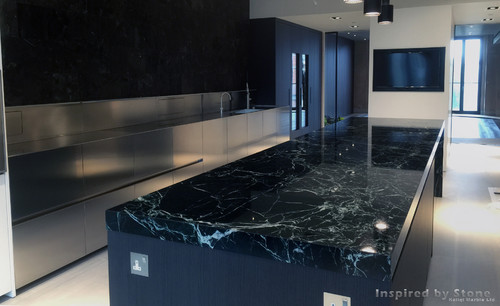
Below, we cover exactly how to wash marble day-to-day, how to deep clean it, how to shine up a dull marble surface, and the full list of do’s and don’ts that keep it looking new.
Is marble hard to clean?
No, marble is actually one of the easier natural stones to keep clean day-to-day, as long as you stay ahead of spills. The issue isn’t effort, it’s chemistry: marble is a porous, calcium-based stone, so it reacts badly to acidic products (vinegar, lemon juice, most bathroom sprays) and absorbs liquid if left wet. A five-second wipe-down after cooking is usually all it needs. Neglect is what makes marble look tired, not the material itself.
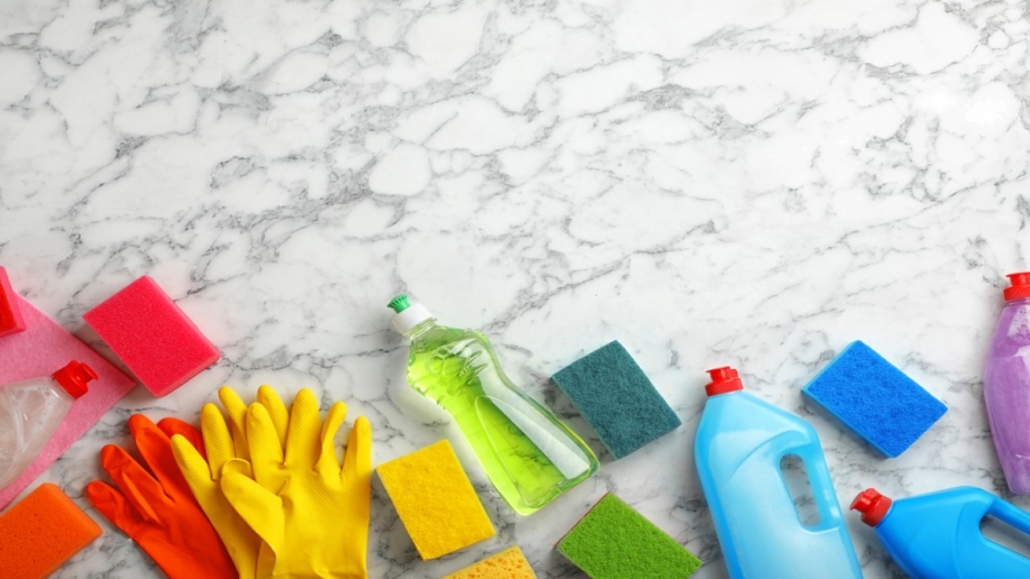
What you’ll need
- Warm water
- A few drops of mild, pH-neutral dish soap (or a stone-specific cleaner)
- A soft microfibre cloth or non-abrasive sponge
- A separate soft, dry towel for drying
- Optional: bicarbonate of soda (for light stains), a marble-specific polishing powder (for shine), and a natural stone sealant
Avoid anything acidic, abrasive, or ammonia-based, including most all-purpose kitchen sprays, vinegar solutions, and scouring pads.
How to clean marble worktops: step by step
- Wipe up spills first. Blot (don’t rub) any liquid, especially wine, coffee, citrus, or oil, as soon as it happens.
- Mix your solution. Combine warm water with a small amount of mild, pH-neutral soap.
- Wash with a soft cloth. Apply the solution in circular motions using a soft sponge or microfibre cloth, never anything abrasive.
- Rinse thoroughly. Go over the surface again with a clean, damp cloth to remove any soap residue, which can build up and dull the stone over time.
- Dry completely. Use a separate dry towel to remove every trace of moisture. This is the step most people skip, and it’s the one that causes dull, streaky marble.
Do this daily (or after any spill), and marble worktops need very little else.
How to shine up marble
If your marble has lost its shine, it’s usually one of two things: a build-up of soap residue and light scratching from everyday wear, or the surface simply needs re-polishing. Here’s how to bring the shine back:
- Deep clean first. Wash the whole surface as above and let it dry fully, you need to see the stone clearly before assessing shine.
- Buff with a dry microfibre cloth. A surprising amount of dullness is just residue. Buffing in small circular motions with a completely dry cloth restores shine on its own in many cases.
- Use a marble polishing powder for deeper dullness. These are specifically formulated (unlike generic “stone polish” sprays) and use fine abrasives designed not to scratch marble. Apply a small amount with a damp cloth, work it in gently, then buff dry.
- Reseal if the shine still doesn’t return. A worn sealant layer leaves marble looking flat rather than glossy. If polishing doesn’t fix it, it’s likely time to reseal (see the sealing section below).
- For serious etching or scratches, call a professional. Deep etch marks (usually from acidic spills left too long) need diamond-pad honing and repolishing, this isn’t a DIY job, and attempting it with the wrong tools can make it worse.
How to deep clean marble and remove stains
For everyday grime, the basic wash above is enough. For a stubborn or older stain:
- Make a baking soda paste. Mix bicarbonate of soda with a small amount of water into a thick paste, and apply it directly to the stain.
- Cover and leave. Cover with cling film and leave for up to 24 hours — no longer, as extended exposure can affect the finish.
- Wipe and buff. Remove the paste with a damp soft cloth and buff dry.
- For lighter marble only: hydrogen peroxide (diluted) can help lift stubborn stains. Avoid it on darker marble, as it can cause discolouration.
If a stain won’t shift after this, a commercial marble-specific stain remover or a professional stone restorer is the next step, don’t reach for household bleach or vinegar to “power through” it.
Do’s and don’ts of cleaning marble
Do:
- Wipe spills immediately, especially wine, coffee, citrus and oil
- Use warm water with a mild, pH-neutral soap and a soft cloth
- Dry the surface completely after every clean
- Use coasters, trivets and chopping boards to prevent etching and scratches
- Reseal periodically (see below)
Don’t:
- Use vinegar, lemon juice, bleach or ammonia-based cleaners
- Use abrasive scourers, wire wool, or rough sponges
- Leave the surface wet, marble absorbs moisture and can dull or stain
- Cut, stand, or sit directly on the marble
- Seal more often than needed, over-sealing leaves a cloudy film
Sealing your marble worktop
Sealant is what gives marble its resistance to staining, it doesn’t stop absorption entirely, but slows it down enough that you have time to wipe up a spill before it sets. A newly installed or professionally sealed worktop typically stays protected for 6–12 months, though this varies by marble type and how much the surface is used.
Quick test: flick a few drops of water onto the surface. If they bead up, the seal is still working. If the water soaks in within a minute or two, it’s time to reseal. Always follow the product instructions, and avoid resealing “just in case” Marble can only absorb so much sealant, and doing it too often just leaves an unattractive film on top.
FAQs
How do you deep clean marble?
Use a paste of baking soda and water for stains, or a warm water and mild dish soap solution for general grime. Apply with a soft cloth, let it sit if needed, then rinse and dry thoroughly. A commercial stone cleaner is a good alternative for regular deep cleans.
Is baking soda safe for marble?
Yes, in the right quantity, on light-coloured marble. It’s a mild abrasive that lifts stains without acid. Avoid it on dark marble, where it can affect the colour over time.
How do you clean marble countertops naturally?
Warm water with castile soap, or a baking soda paste for stains, are both effective natural options. Diluted hydrogen peroxide can help with stubborn marks on light marble. Daily wiping is the single most effective “natural” method; prevention beats any product.
Is hydrogen peroxide safe to use on marble?
Yes, on light-coloured marble, used sparingly. On dark marble, it can cause discolouration, so it’s best avoided there.
Is rubbing alcohol safe for marble?
Yes, rubbing alcohol won’t damage marble the way vinegar or bleach can, though it has limited disinfecting power. It’s a reasonable light-duty option when you want to sanitise without risking the finish.
Can you use vinegar on marble countertops?
No. Vinegar is acidic and will etch and dull marble over time, even with occasional use. Stick to mild soap and water instead.
How often should I clean my marble worktop?
Wipe it down daily as part of your normal kitchen routine, and address spills the moment they happen rather than waiting. A proper deep clean once a week keeps it looking new.
Why has my marble worktop lost its shine?
Usually a combination of soap residue build-up, light everyday scratching, and a worn sealant layer. Try buffing with a dry cloth first.


Leave a Reply
Want to join the discussion?Feel free to contribute!