
Budget Kitchen Renovation Ideas: A UK Homeowner’s Guide
Key Takeaways
- A budget kitchen renovation refreshing existing features can cost a fraction of a full remodel, sometimes under £1,500.
- Keeping the existing layout by leaving the sink, hob, and fridge in place avoids expensive plumbing and electrical work.
- Repainting structurally sound cabinet doors or refacing them is much cheaper than a full cabinet replacement.
- Small updates like swapping hardware, upgrading lighting, and refreshing the backsplash create a big visual impact for a low cost.
- Tackling cosmetic tasks like painting and demolition yourself can significantly reduce labour costs, reserving professionals for plumbing and electrical work.
Cracked tiles, tired cabinets, an oven that’s seen better days, if your kitchen is starting to show its age, you don’t need a five-figure remodel to fix it. With the right planning, most kitchens can be transformed on a modest budget by focusing spend on the changes that make the biggest visual and practical difference, rather than replacing everything from scratch.
What Does a Budget Kitchen Renovation Cost in the UK?
A full new kitchen installation in the UK typically costs £5,000–£25,000+, with most homeowners spending around £7,000–£10,000. But a budget renovation, refreshing what you already have rather than ripping it all out, can often be done for a fraction of that, sometimes under £1,500, depending on how much you tackle yourself and how much of the existing kitchen is still structurally sound.
The biggest cost drivers to watch are:
- Moving plumbing or electrics (relocating a sink, hob, or fridge point) adds significant labour cost, keep appliances in their current positions where possible.
- Full cabinet replacement versus refacing or repainting.
- Labour, DIY-ing tasks like painting, tiling, and demolition can cut costs substantially, though plumbing and electrical work should always go to a qualified professional.
Renovating Your Kitchen Cost-Effectively
1. Plan Before You Buy Anything
Before spending a penny, map out exactly what needs to change and in what order. Unplanned mid-project additions are one of the most common ways budgets spiral. If you’re bringing in a tradesperson for any part of the job, get at least three quotes, prices for the same work can vary considerably between fitters, and comparing quotes also helps you gauge who you’ll feel comfortable having in your home.
2. Keep the Existing Layout
One of the single biggest budget-savers is leaving your sink, hob, and fridge where they already are. Moving plumbing or rewiring sockets for a new layout is one of the most expensive parts of any kitchen job. If the current layout works reasonably well, resist the urge to redesign it from scratch.
3. Repaint or Refresh Your Cabinets
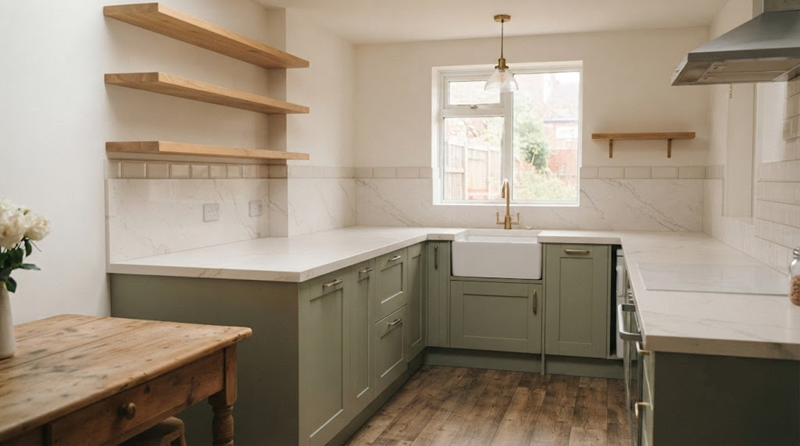
Cabinets are often the priciest part of a kitchen, so replacing them outright can push a budget renovation well over budget. If your cabinet doors are structurally sound, repainting them is far cheaper than swapping them out. White, soft grey, sage green, and muted blue are popular, versatile choices that suit most kitchen styles. If full repainting feels like too much, look at refacing, replacing just the doors and drawer fronts while keeping the existing cabinet boxes, which delivers a similar visual lift for less.
4. Upgrade Handles and Hardware
Small details carry a lot of visual weight. Swapping old handles, knobs, and drawer pulls is one of the cheapest updates available, brushed brass reads as warmer and more traditional, while stainless steel gives a sleeker, more contemporary finish. This is a low-cost, low-effort change with a disproportionately large payoff.
5. Improve the Lighting
Poor lighting can make even a freshly decorated kitchen feel flat or dated. Adding under-cabinet strip lighting, swapping a single central pendant for spotlights, or simply changing bulbs to a warmer or brighter tone can noticeably change how the room feels, often for under £100.
6. Refresh the Backsplash
Retiling an entire backsplash can be surprisingly expensive once materials and labour are added together. Peel-and-stick backsplash tiles give the look of traditional tiling at a fraction of the price, and specialist tile paint can refresh existing tiles without removing them. If only part of the backsplash is worn, focus your budget there rather than replacing the whole thing.
7. Update Worktops Carefully, Don’t Assume You Need New Ones
Worktops are costly to replace, particularly in natural stone. If your current worktop is structurally fine, countertop refinishing kits or paint can update its appearance without a full swap. Where replacement is unavoidable, laminate and solid wood worktops are considerably cheaper than quartz or granite and hold up well for most households.
8. Maximise Storage Before Adding Cabinets
Better storage often does more for a kitchen’s usability than new units. Drawer organisers, pull-out baskets, shelf risers, and wall-mounted racks make existing space work harder. Open shelving is also a genuinely cost-effective alternative to upper cabinets, and works particularly well in smaller kitchens where every bit of vertical space counts.
9. Replace the Tap, Not the Whole Sink
A leaking or awkward-to-use tap is a small fix with a big everyday impact. You don’t need a premium model, just one that matches your existing hardware finish and fits your sink properly.
10. Do the Labour You Can Do Yourself
Demolition, painting, flooring, and basic assembly are all jobs most homeowners can take on themselves with a bit of research, and labour typically makes up 20–35% of a kitchen renovation’s total cost. Save the professionals for plumbing, electrics, and anything structural.
11. Build in a Contingency
Set aside roughly 10–20% of your budget for the unexpected, older kitchens in particular have a habit of revealing problems (damp flooring, outdated wiring) once work begins. Having this buffer means a surprise doesn’t derail the whole project.
12. Shop Around and Stagger the Work
Compare prices across retailers before committing to materials or appliances, and don’t feel you need to finish everything in one go. Splitting the renovation into phases, cabinets this year, worktops next, can make a bigger overall transformation affordable over time.
Conclusion
A stylish, functional kitchen renovation doesn’t need a large budget, it needs good planning. Keeping the existing layout, doing what DIY work you safely can, comparing quotes, and focusing spend on high-impact changes like cabinet refreshes, hardware, lighting, and storage will get you most of the way to a full transformation for a fraction of the cost of starting from scratch.
Frequently Asked Questions
Q1 Can I renovate a kitchen for under £1,000?
Yes, if you focus on cosmetic changes: repainting cabinets, swapping handles, updating lighting, and adding a peel-and-stick backsplash can all be done within a few hundred pounds and collectively transform the room’s appearance.
Q2 What’s the cheapest way to update kitchen cabinets?
Repainting existing cabinet doors is the cheapest option, followed by refacing (replacing just the doors and drawer fronts). Full cabinet replacement is the most expensive route and usually only necessary if the boxes are damaged.
Q3 What adds the most cost to a kitchen renovation?
Moving plumbing or electrics to change the layout is typically the biggest cost driver, followed by full cabinet replacement and premium worktop materials like natural stone.
Q4 Should I DIY my kitchen renovation or hire a professional?
Cosmetic work, painting, tiling, assembly, demolition, is DIY-friendly for most homeowners. Plumbing and electrical work should always be left to a qualified, ideally Gas Safe or NICEIC-registered, tradesperson.

