
How to Choose the Best Marble for a Dining Table Top
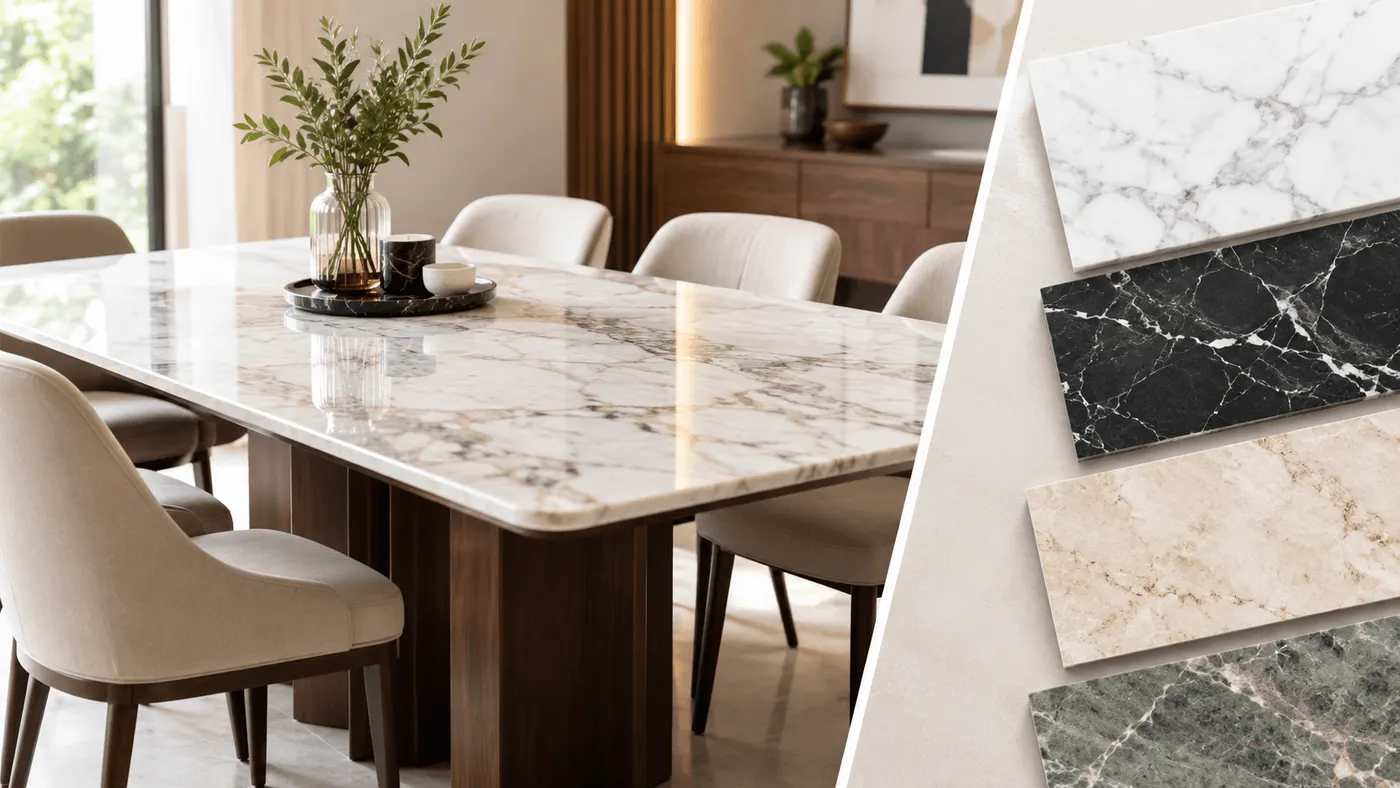
Choosing the best marble dining table top involves understanding sustainability, giving more attention to timeless style, appearance, best finishes, and cost value. Marble adds natural elegance to a dining space, with its unique texture and strong base. Although marble is attractive, it is porous and prone to staining and etching, so it needs sealing and care on a kitchen or tabletop. Understanding these qualities helps you select a marble surface that complements your interiors and adds an element to fine dining.
How Do You Polish Marble Floors?
To polish marble floors, clean the surface mildly with a pH-neutral stone cleaner, repair minor damage, and remove scratches with a mild cloth. There is no need to use a lot of detergents since marble requires maintenance but can easily be kept clean. Apply a marble polishing compound to restore shine, then seal the stone if needed. For deep scratches, extensive etching, or uneven floors, professional polishing is most useful.
Why Is Marble a Quiet Choice for Dining Table Tops?
Marble is popular for dining table tops because it combines natural beauty with a selective finish. Each slab has its own features and versatile appearances. When we often look at a plain timber table, marble tops have uplifted and revamped interiors since Roman times. Whether you are aesthetically leaning towards an unconventional, modular, and upscale strata of living, adding marble can create an element of interest to the austere space.
White marble creates a bright, elegant and decorous look to the living interiors, while beige, grey, and darker varieties add a fine touch to the modern and contemporary interiors. Marble is also naturally cool to the touch and can last for many years when properly maintained. While choosing the best marble for dining table it is relatively important to have a colour preference and be very specific about the places where it can be incorporated. However, it is a relatively soft, calcium-based stone that can scratch, stain, and react with acidic foods. Choosing the right variety and ensuring full maintenance can help to keep the stone secure. Maintenance and cleaning of marble do not require maximum concentrations of soap or cleaners, which may eventually leave a film. A soft cloth and mop on the floor suffice for cleaning.
Types of Marble to Consider for Dining Tables
The best marble depends on your design, preference, and taste for interiors. White marble, including Carrara-style varieties, smooth grey veining and is suitable for less modular interiors. Beige and cream marble work well in softer and subtle dining spaces with neutral colour themes. Green and brown marble dining table tops create a bolder presence. Before purchasing, it’s important to read through the texture, scope, and finesse of marble.
Step-by-Step Guide to Polishing Marble Floors
Marble floors and dining table tops require simple care and cleaning. The art of keeping marble intact and polished is using a soft cloth to wash away any untimely stains. Blotches.
Step 1: Clean the Surface
Remove any dust or loose particles with a microfibre cloth. Clean the floor with a pH-neutral marble cleaner and a soft mop, and follow the instructions carefully. Remove any leftovers with clean water if required and allow the surface to dry.
Step 2: Repair Chips, Cracks and Damage
It’s also important to inspect a marble dining table top for 8 people by keeping in mind the minute stains, cracks, or chips that have developed over time. Inspect the marble for chips, cracks, loose tiles, and deep stains. Minor chips can easily be repaired with a soft filler. Structural cracks, loose tiles, and heavy damage require professional attention before polishing.
Step 3: Hone the Marble
Honing removes unwanted scratches, light etching, and irregular surface marks using finer diamond polishes. The correct polishing grade depends on the stone’s condition and the required finish. Improper grinding can create irregular patches or distorted images, so honing requires the presence of a stone professional.
Step 4: Polish the Marble
It’s important to use a marble polisher and use polishing pads as per the instructions of the product. Not only is it important to remove stains from the edges, but also to work around the surfaces that have been damaged due to excessive pressure and more exposure to heat or by using a product like granite or a strong material.
Step 5: Seal the Marble if Needed
Once the marble is clean and fully dry, apply a suitable impregnating sealer if recommended for the stone and its intended use. Follow the specified application and curing instructions. Remove extra product as directed to prevent any last-minute residue. Sealing helps reduce absorption but cannot prevent acid etching.
How to Remove Marble Scratches and Etching
The right treatment depends on how deeply the marble is damaged and the intensity of the repair. Scratches and etching are different: scratches involve physical abrasion, while etching is a chemical reaction that changes the stone’s surface.
Minor Marks: Initially, there might be some scratches on the surface, which may respond to the marble product and make it suitable for finishing. There can be light etching done to test the product; follow the instructions and remove the minimal marks.
Less Damage: There can be minor scratches or blotches that can be seen on a marble dining table top if there is less care is taken to protect the natural stone. Diamond polishers can remove the damaged top layer but using it incorrectly can make the texture even worst. A need of a professional trainer is important to clean the edges and wash away the stains or irregularities.
Uncontrolled Damage: Deep gouges, cracked slabs, or major chips can create some unevenness. Continuous repairing and care includes resin filling, honing of marble and adequate grinding. Do not attempt aggressive sanding or grinding on valuable marble without appropriate equipment and experience.
FAQ’s
1. What is the best marble for a dining table?
The best marble for a dining table basically depends on the cost you are wanting, color preference, and style attributes. Carrara marble is a popular choice for its soft grey veining and timeless look, while Calacatta marble presents a bolder vision. Since marble is porous and can be sensitive to stains or scratches, choosing a microfibre cloth for cleaning is important.
2. What size marble dining table top is suitable for 8 people?
A marble dining table top for eight people typically measures 72–96 inches (6–8 feet) long and 36–48 inches wide for a rectangular design. A round table should generally be around 60–72 inches in diameter, which depends on the layout of chairs and size.
3. How thick should a marble dining table top be?
A marble dining table top is commonly 18–30 mm (approximately ¾–1¼ inches) thick. The thickness of marble depends on the table’s side, structure, and layout.
4. How do you clean a marble dining table top?
Clean a marble dining table top with a soft microfiber cloth, warm water, and a pH-neutral cleaner. There is no need to add excessive soap, which can make the marble lose its glossy finish.
Not sure what it will cost?
Send your plan and we reply with an itemised quote.
4.9 from 120 Google reviews