
Granite Staircases: Complete Guide to Designs, Costs and Installation
Key Takeaways
- Granite staircases are known for their exceptional longevity, durability, and ability to bring elegance and sophistication to modern households.
- Granite is more practical for everyday use compared to marble, which is traditionally seen as the main essence of luxury in modern homes.
- Granite staircase costs in the UK typically range from £1,500 to £10,000 or more, with premium floated designs potentially costing £15,000 or more.
- The installation process involves a site survey, precise measurements, custom stone fabrication, structural preparation, and secure fitting by professionals.
- Selecting appropriate slip-resistant finishes like flamed or brushed granite, along with anti-slip inserts, is crucial for safety especially when surfaces are wet.
A granite staircase is the heart of every home and provides an exceptional appeal to the interiors and design of a modern household. Known predominantly for their longevity and durability, these staircases are mainly used to bring elegance and sophistication to everyday living. Cleaning the staircases requires precision and a particular cleaning liquid rather than over-soaking the area with various detergents. Granite resists everyday wear, comes in a wide range of natural colours, and can last for decades with correct installation and care.
What Is a Granite Staircase?
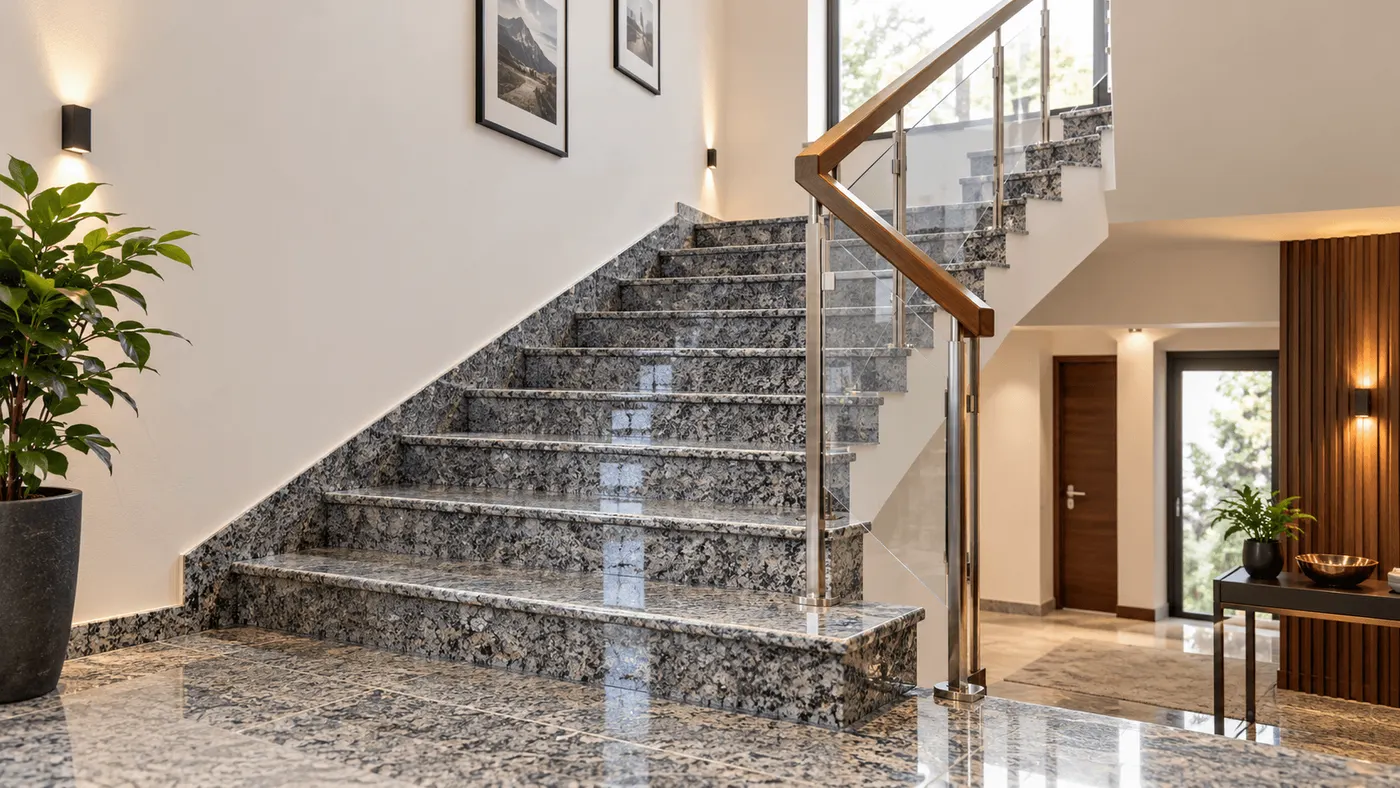
Used elegantly to make the best part of a home and with a robust appeal, granite stairs enable architectural uplift. Granite is available in popular colours like beige and white, red and black. Granite stair treads are the horizontal surfaces you step on, while risers are the vertical sections between continuous treads. Both can be cut to size by a stone fabricator by matching landing, skirting, and edges.
Granite vs Marble Stairs
Granite is most suitable for practical homes, whereas marble is the main essence of luxury in modern homes. Where marble provides a drop of elegance, granite brings in some logic and ease of operation in the household with a broad use case. Both are natural stones, and their performance depends on the specific stone, surface treatment, cleaning, and installation.
Neither stone is automatically slip-proof. A polished granite or marble staircase can become slippery, particularly when wet, so surface finish and edge detailing should be selected with safety in mind.
Design and Layout of Granite Stairs
One of the major reasons why natural stone granite stair treads, are used over any alternative material is their outstanding strength and durability. Stones like granite, limestone and sandstone are trusted with heavy foot traffic, resisting everyday wear and maintaining their appeal with outdoor presence. Granite staircases are available in a variety of designs to complement both modern and traditional UK homes. Straight granite staircases are a popular choice for practical and less cluttered homes.
There is often a more modular look which is suitable for floating and curved staircases. To talk of bespoke and dazzling granite staircase designs, which bring the bend of luxury home, there is so much to embrace. Homeowners can easily make a selective choice between honed, polished or heated finishes along with an amazing range of granite colours and blending risers. Where polished granite offers more finish and enlivens the texture of UK homes, flamed finishes suit outdoors.
Cost of Granite Staircases
Granite staircase costs in the UK typically range from £1,500 to £10,000 or more, depending on the staircase type, type of granite, number of steps and design layout. Simple staircase is more durable whereas the premium luxury of floated staircase. can cost £15,000 or more. Extra expenses may include structural changes, continuous fabrication and installation and maintenance charges.
Installation of Granite Stairs
The installation of a granite staircase begins with a site survey, correct measurements and the perfect choice of granite slabs, finishes and tread dimensions. A stone fabricator then works on the main templates, tries to bifurcate the granite treads and rises as per the main needs and smoothens the edges. Meanwhile, the staircase fitter or contractor makes sure that the supporting structure is level, stable and capable of carrying the weight of the stone.
The granite stair installation, has various parts which are then fixed with joints, components are then fitted using an appropriate fixing system, with joints, edges and anti-slip details completed according to the design. Final checks ensure that the steps are secure, evenly aligned and suitable for safe use. A simple process of installation may take a few days, while a complete project involves exceptional designs and fabrication. Choosing an experienced granite fabricator and professional fitter helps achieve a durable, and elegant staircase which meets the need of UK homes.
Slip Resistance and UK Building Regulations
Choose a suitable slip-resistant finish and professionally designed stair dimensions rather than mainly concentrating on the staircase. Flamed granite is more textured and showcases more luxury for better contemporary homes. Brushed finishes offer a less enriching texture. Anti-slip inserts or suitable nosing treatments can also improve grip at the front edge of each tread.
Polished granite can look marvellous with striking indoors but it needs complete maintenance with water spills or beverages. For outside steps, drainage, weather exposure, algae control, and maintenance also matter. Ask the fabricator for relevant slip-resistance test information for the actual stone and finish being proposed.
FAQ’s
1. What are the benefits of a granite staircase?
A granite staircase provides more longevity and durability and ensures complete sustainability with better maintenance. Granite is a natural stone suitable for commercial and residential areas.
2. How much does a granite staircase cost?
The cost of a granite staircase depends on the granite grade, colour, thickness, finish, staircase design and installation requirements. Straight staircases are more economical than curved patterns.
3. What are granite stair treads?
Granite stair treads are the horizontal stone surfaces you step on when climbing or getting down the stairs.
4. How is a granite staircase installed?
Installing a granite staircase requires correct measurements, careful stone fabrication, and complete fixing. It’s important to inspect the scratches and edges before installing a granite staircase.
5. Is granite better than marble for stairs?
Granite is a more practical choice for commercial hubs, as marble is mainly used for luxury and elegant homes.
Not sure what it will cost?
Send your plan and we reply with an itemised quote.
4.9 from 120 Google reviews